Search This Blog

Showing posts with label Spode Patterns. Show all posts

Saturday, June 20, 2020

Spode Geranium

Last Monday, I was perusing the clearance section of one of my favorite outlets for new Spode, which happens to be called Tuesday Morning, and stumbled upon this beautiful dish.


I had seen it in the store before the quarantine, and had wanted to buy it, but it was $43 so I decided to wait until it went on clearance. (And I was so glad I had waited!) 

This particular pattern is one of my favorites, partially due to the lovely geometric border around the dishes. It is striking, and quite different than the borders on the other Spode patterns I have seen, so I decided to do some research and see if I could find out the history of the pattern. 

Here's what I found out. 


The Geranium pattern was first introduced in 1820. This fact is probably not new to anyone who has looked at the back-marking of a new piece Geranium patterned Spode, but what you might not have realized is that this pattern is, in fact, quite different from anything that Spode had produced up to that point. Before 1820, Spode produced may patterns, ranging from the Chinese "Willow" pattern and the vastly popular and prolific "Blue Italian",  to the more obscure "Caramanian" and "Tiber" patterns. 

From what I have been able to find, all the previous patterns have been scenic in nature. Even the Indian pattern of 1815 features  large, sprawling bush, set on a small patch of grass. The simplicity of the geranium sprig, and the clean, almost modern lines of the geometric border are strikingly different. In his book Antique Blue and White Spode, Sydney B. Williams agrees that this pattern "has an entirely contrasting appearance to all those which preceded it."*

Perhaps this is why it is one of the designs Spode has decided to manufacture again. To be honest, I have never found an old piece of Geranium, but I do have several pieces of new Spode Geranium in my collection.


Pictured above are my new purchase, which I must admit I don't know what to call... (If you happen to know what this dish is called, please leave a comment below!) my Pasta Bowl in the front, and then of course there are two spice jars. 

Interestingly, as I put all my Geranium pieces side-by-side, I noticed that they are not all the same. I knew that some Spode collections, like the Caramanian and Zoological collections, have different pictures on each plate, but I was startled to see that this pattern had two distinct types. 

My recent purchase as well as the "Mixed Herb" jar, feature the same basic geranium, but in much darker shades of blue. The Pasta Bowl and the "Rosemary" jar are so much lighter, I thought they were different flowers at first.

The borders also are different, although if you look closely, it is mostly a matter of scale: The darker two pieces have the same design elements, just smaller and closer together. In the lighter pieces, the shapes are stretched out, and not condensed like the others. 


From the back markings and some additional research, I think the most recent generation of Spode Geranium is the darker style, while the other is older, but not significantly. All the Geranium pieces in my collection are marked dishwasher and microwave safe, which means they are quite recent.  


*p. 182

Thursday, March 12, 2020

Tips on Recognizing Old Spode

The newest addition to my small collection of Spode is what is probably a rimmed soup bowl in the Blue Italian pattern. 


It has a bit of a ridge around the edge, where the bowl and rim meet, which makes me wonder if it might actually be some sort of covered dish, similar to the muffin dish pictured in an earlier post. It is a bit shallow for a muffin dish, however, so my assessment thus far leans heavily in favor of a soup bowl. I suppose another option could be something like a lidded butter dish as well, although I haven't explored that possibility yet.

I had found this "mystery" bowl on eBay a while back, and there were several things about the listing that caught my eye and caused me to decide to bid on it. 

The first thing I noticed was that, the listing was for a "bowl", no other categories given. Those who know Spode usually include the type of bowl in the title. (e.g. "soup bowl", "ascot cereal bowl", "Pasta bowl", "Serving bowl", etc.)

Another thing about the listing that tipped me off was the fact that the pattern was misnamed. This was especially significant since Blue Italian is by far the most common of the Spode patterns. In this case, instead of Blue Italian, the seller merely described the pattern as "castle". (There is, by the way, a Spode pattern called "Gothic Castle", but  it bears no similarity to Blue Italian.)

When I looked at the pictures, the bowl had all the hallmarks of a piece of Old Spode, which are as follows:

1.The Back Mark
According to my amateur research (meaning I looked it up in my Spode resource books), this plain, impressed marking was used prior to 1833, which is when the Copeland period began. 

The Spode period lasted from 1764 to 1833, after which time "Copeland" appeared on the back markings alongside or sometimes instead of the Spode name. Markings from the Spode period also tend to be impressed, rather than transfer printed. (Although I have read that both Spode and Copeland period marks could be found either impressed, stamped, or transfer printed.)
Another indication that this is from a period prior to 1833 is the fact that the country of origin is not included in the marking. In 1833, legislation was passed in the United States that required all marked goods imported into the country to be marked with their country of origin. Thus, Spode pieces from 1833 on typically include the word "England" as part of their back marking.

The number, I believe, is a workman's mark. It was common during the Spode period for workers to use a number, letter, or other marking to signify that they were the workman who made a particular piece. This ensured that they would be paid for their work, since pay was based on how many items they completed.

2. The Feel: Thickness and Weight:

Another indication that the piece is old is the feel of the material itself. New Spode feels heavy and thick, like stoneware, while old Spode tends to feel thinner, more fragile, almost. It is a little lighter, and the plain white of the underside of the piece tends to be a bit less brilliant than new Spode, and perhaps even a little yellowy.

3. The Color: Faded, Lighter, or Slightly Different Hue.

Now, when I received this bowl, I was at first unsure that it could actually be old, because the glaze and the pattern were in such good condition. I thought perhaps it could be a reproduction, but when I compared the coloring with the brand-new Blue Italian cake stand I had just bought, as well as a Blue Italian cereal bowl, also brand new, the difference was striking. These two pieces are the exact same pattern, but their coloring is noticeably distinct:


While one is more purple, the other is a dusky hue, with almost a hint of yellow. The latter is consistent with another piece in my tiny collection, a soup tureen which dates from the Spode period as well.  The feel and look of both pieces being consistent, I became convinced that the finish was merely well-preserved. Also, upon further inspection, it does have some very light scratches in the glazing, just on the surface, consistent with use and age.

~ ~ ~ 

I always like to imagine where these old pieces of Spode have come from and what kind of "life" they have had before arriving on my doorstep. I believe this piece was either part of someone's collection, or else it is part of a lidded serving dish which was not needed very often. This would account for the well-preserved nature of the piece, particularly if there had been a lid, and it had not survived long and the base had been set aside. 

Monday, November 4, 2019

Spode Reference Books

Over the past few months, I have made several additions to my small library of Spode research materials. I thought a quick overview might be helpful for any would-be Spode collectors out there.

Of course, I should start by mentioning my best go-to reference: Antique Blue and White Spode by Sydney B. Williams. Originally published in 1943, this helpful book features descriptions of the different Spode Blue patterns, along with interesting accounts of the history of each one. As you may have noticed, I reference this resource often. In addition to providing information, Williams gives a detailed chronological list of Spode markings, along with some pictures of some of the various Spode markings.


The next resource I found was a pamphlet called The Story of the Blue Room Collection, which is put out by Spode. In addition to some fascinating information about Spode history and the transfer process, there is a list of dated markings, which is particularly helpful for the budding collector.


I also ran across this Shire Album simply entitled Spode,  by Robert Copeland published in 1994. Again, this resource has lots of history, and some pictures, although in this case the photos are in black and white.


By far, the most impressive addition to my little research library in recent months has been the large and impressive Spode &Copeland by Steven Smith. This book is full of beautiful color illustrations, not only of the blue and white Spode pieces, but also many other colorful and beautiful pieces, like this hand painted plate featuring a stork. (Also, I must admit that I'm quite taken with the non-blue-and-white Maritime England Series)


So far the best and most useful part of this book for me has been the marking information towards the back. There is a pictorial markings list, as well as an explanation of the markings and what year different letter markings were used. This has allowed me to see not only what age range a piece was made during, but even to identify what year a specific item was made in. (Which is super helpful when trying to decide if an item is worth adding to my tiny Spode collection.)


And because I love old books, there is The Vernay Collector's Series: Old English Potteries and Porcelains. This is not a Spode book per se, but it does have a short chapter on Spode.


Lastly, I happened upon a little volume by Charles Dickens, of all people, entitled A Plated Article. Basically, Dickens is bored in a tiny village, where in his boredom, he picks up a Spode plate, which in true Dickensian style, begins speaking to him about how it was made and why he should be careful not to break it. It made for a humorous and charming read.

So, those are my Spode books. If you have suggestions for books I should add to my little research library, leave a comment!

Friday, June 7, 2019

Pasta Bowls: Practical or Pointless?

A while back, I decided to make a list of what dishes I had, and which dishes I still needed. As I browsed the search results for "blue Spode" on Amazon.com, I began listing the things I wanted in order of importance. At the bottom of the list, in tiny letters, with a question mark at the end, were the two words: "pasta bowls". I almost didn't write them down because, let's be honest, there are many kinds of bowls to choose from. With soup bowls, cereal bowls (coupe or ascot), dessert bowls, serving bowls of many shapes, sizes, and descriptions, who needs a separate bowl just to eat pasta from?


One day, while at an antique store, I came across one of these flat pasta bowls at a rather good price and in the Geranium pattern I had been wanting, so I bought it, figuring that I could try it out and see if I thought it would be worth the investment to buy more.

That very day, my eBay search turned up what looked like a set of pasta bowls, but in the description it sounded like it was just one. It was about the same price as the one I had just bought, but I wasn't sure if I should spend money on yet another pasta bowl. I shared my dilemma with my mom, who asked to see the bowl I had just bought. As I showed it to her, she immediately gave me the answer to my dilemma: she pointed out that they would be perfect for a main dish salad! Now, I don't eat pasta very often, but I do eat salads, especially in the summer! So, I placed my bid for more pasta bowls.

To be fair, the soup bowls might work well for salads, but the unique shape of the pasta bowls makes them perfect for a salad: flat like a plate, but with short, curved sides which keep bits of salad from sliding off while you're eating. The other benefit of the plates is that I am far more likely to eat a salad if I can put it into a dish in which it looks beautiful!

This first week of Summer break, I have enjoyed going out to the garden and picking fresh greens for my salads, which of course look beautiful in my blue and white Spode pasta bowls!

[P.S.]
 --I have yet to use them for pasta...


Friday, April 12, 2019

The Lucano Pattern


       One of my most treasured finds from that very first trip down the Spode aisle at Tuesday Morning is some lovely plates of the Lucano pattern. Honestly, as I dug through the stacks of Blue Room Collection plates, I saw one with this pattern and immediately put several in my tiny stack of plates. I was so excited to show my family the plates I had found that had “a castle” on them! Since then I have also found a small open vegetable dish and a mug (which came in a matching tin on clearance from Spode.com!)


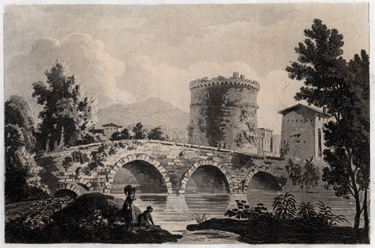
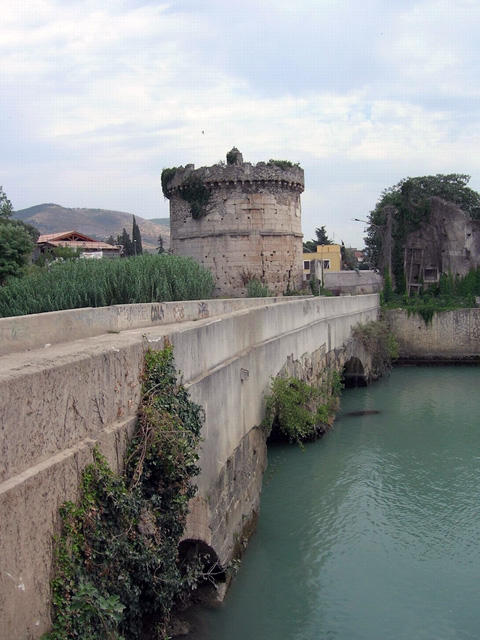
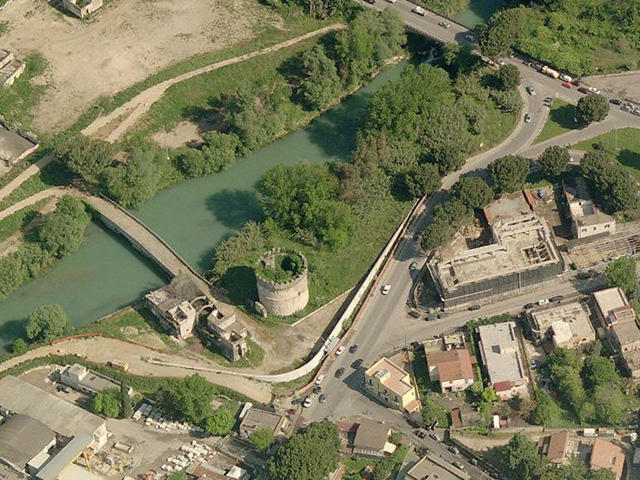
      The pattern itself is based on an aquatint engraving which was originally published in 1798, which features in the foreground the Bridge of Lucano, (Ponte Lucano) a first-century Roman bridge which is a historic site still recognizable today!

Original Aquatint by James Merigo from artisopusgallery.com 

          In his book, Antique Blue and White Spode, Sydney B. Williams gives a good summary of the history and significance of this beautiful place:

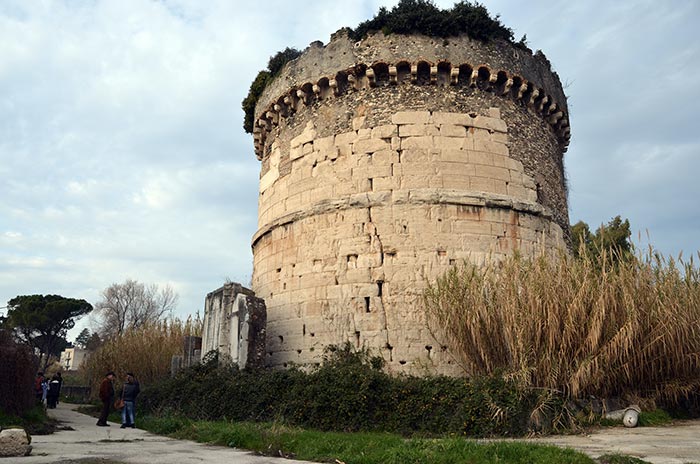
          “This bridge, sixteen miles distant from Rome, derives its name from a victory obtained by the Romans over the Lucanians. It was rebuilt by Tiberias Plautius, who possessed a villa adjoining to it. His magnificent family tomb stood in the same neighborhood. This ancient tomb, round in form, and much resembling that of Caecilia Metella, was repaired by the Goths and converted by them into a fortress.

           The bridge has become well known from engravings and also from the beautiful picture by G. Poussin in the Doria Palace. [see here.] It has been crossed by many warriors of the past, heavily-armed against all foes except deadly malaria, which has played a commanding role in the politics of the Eternal City of Rome." (p.116)

For more on the history of Lucano, you can visit its World Monument Foundation page by clicking here.